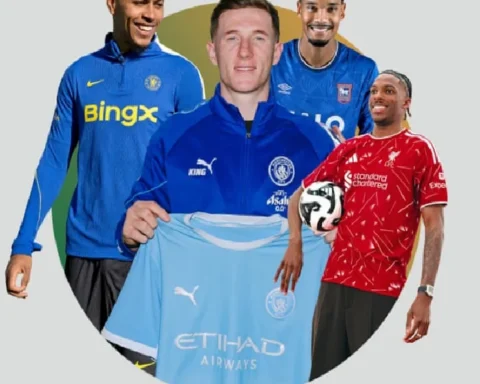
Respect of copyright law has never ranked highly in the list of priorities for unlicensed sports betting operators. Crests of famous clubs and photographs of star players are routinely used to promote brands which could not care less about image rights and trademarks, because these operators know any kind of enforcement is impossible.
- Nightwin and QH88 hijacked Jude Bellingham and Bruno Fernandes, using fake news, photos, and an AI deepfake video to fake endorsements.
- QH88 produced a realistic AI deepfake showing Bruno Fernandes signing at Old Trafford; experts flagged artifacts but casual viewers were deceived.
- Regulators struggle because operators use offshore Curaçao licences and opaque firms like Flybergom B.V., making enforcement and player protection difficult.
Illegal gambling platforms operate almost exclusively from offshore jurisdictions where the anonymity of their ultimate beneficial owners is protected by local regulations and, to further darken the picture, the use of multiple shell companies which exist only as entries on a registry hidden from public view as well. Cease-and-desist letters will be ignored. Legal action? Against whom? You can’t sue ghosts.
Yet, until now, those illegal casinos stopped short of claiming they had been officially endorsed by active footballers. The “global ambassadors” they recruit by the dozens have retired from the game and no longer have to abide by article 27 of the Fifa code of ethics, which prohibits footballers, coaches and officials involved in football from deriving any benefit from their association with sports betting operators, legal or not. Active players who ignore this rule would risk a fine and a ban. Yerry Mina, then at Everton, was fined £10,000 by the Football Association in 2019 after appearing in a TV advert for the Colombian sportsbook Betjuego.
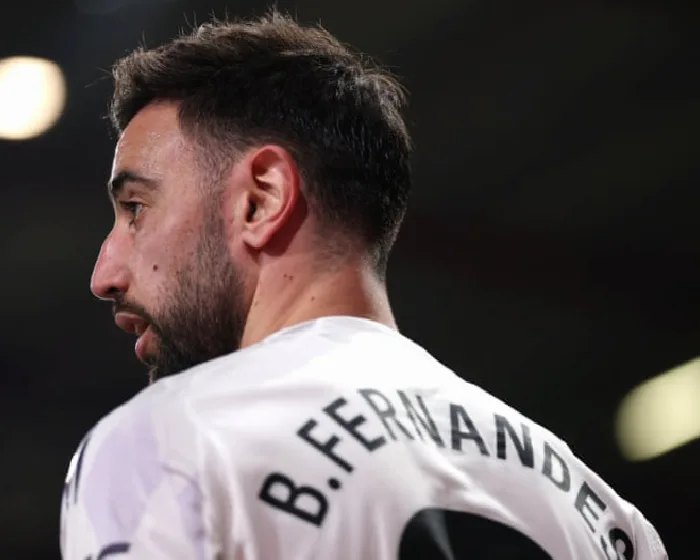
In a significant development, the illegal online casinos Nightwin and QH88 have hijacked the identity of two of the world’s most famous players, Real Madrid’s Jude Bellingham and Manchester United’s Bruno Fernandes, to present them as official partners of their brands, using fake news articles, photographs and AI-generated video to fool their customers into believing that the stars’ endorsement was legitimate.
In the case of Bellingham, Nightwin bought advertising space on Instagram to target users with a made-up story attributed to the BBC, which announced that the player had launched his own “Bellingham Bet” (tagline: “Britain’s most honest betting app”), whose logo incorporated the footballer’s stylised signature used by his sponsor Adidas.
Clicking on the link provided led to an app named “Bellingham Bet”, complete with a (fake) rating of 4.9/5 and boasting of a fanciful 1.9m+ downloads. One more click, and the visitor was taken to the gambling platform, which, if it needed to be said, has nothing to do with Jude Bellingham. Nightwin is an online casino and sportsbook which it is possible to access and register within the United Kingdom without a VPN; this, when no “Nightwin” appears in the gambling business register of the Great Britain Gambling Commission.
The one jurisdiction where Nightwin is licensed is Curaçao, a longtime offshore haven for dubious operators, where it was launched this year by Flybergom B.V., a company incorporated in the same jurisdiction in May 2024 which acquired its gaming licence there in September 2025. Flybergom B.V. also operates the DK88 (or Dashking88) brand which targets the illegal Malaysian and Singaporean markets. Flybergom’s B.V. registered address in Willemstad is an office building known for housing corporate services companies which act as trustees for thousands of opaque businesses; and there the trail ends.
Fortunately for Bellingham, the scam was short-lived. The “Bellingham Bet” Instagram ads disappeared in days and screenshots are the only traces left.
Bruno Fernandes has not been as lucky. The Vietnamese sportsbook and casino website QH88 was not satisfied with a made-up BBC story and a couple of fairly crude links. It built a website around the brand’s fictitious association with the Portugal international and devoted considerable resources to producing a strikingly realistic AI-generated deepfake video purportedly showing the playmaker signing his “ambassadorial contract” with representatives of QH88. The venue? Old Trafford.
The Norwegian website Josimar had this one-minute film analysed frame-by-frame by an expert who identified multiple tell-tale signs of AI intervention; but these red flags (blurred details, minute continuity mistakes, generic faces) would have been undiscernible to casual viewers, who can watch the video on QH88’s main website, where it plays on a loop. The brazenness of the appropriation somehow makes it even more credible.
It is easy to understand why a sportsbook which operates in Vietnam should pick Fernandes as its fictional ambassador: he is the captain and serial player of the year of a club who remain, by some distance, the most popular in that country. If any player was more vulnerable than others to an attack of this kind, it had to be him, a footballing victim of a deepfake. Unless regulators worldwide can somehow coordinate their – so far sketchy – efforts to combat illegal sportsbooks, what happened to Bellingham and Fernandes is bound to happen to many others.
A spokesperson for the Great Britain Gambling Commission did not address specific questions related to Nightwin and QH88, but said: “Whenever we become aware of an unlicensed operator we take action. Before depositing money we urge consumers to check the business holds a Commission licence and consequently must ensure the gambling it provides is safe, fair and crime-free.”
The Guardian contacted QH88, the management of Bruno Fernandes, Real Madrid and Manchester United, who did not respond or turned down the opportunity to do so. Global players’ union Fifpro passed on our request for comment to their legal department, who were not able to respond in the timeframe provided by the Guardian before publication. It was impossible to reach Nightwin or Flybergom B.V. for comment. The Premier League directed the Guardian to Manchester United and Fernandes’ representatives.
“Illegal sports betting” is defined by the Macolin Convention, of which the UK is a signatory, as “any sports betting activity whose type or operator is not allowed under the applicable law of the jurisdiction where the consumer is located”, a definition which is also accepted by the World Lotteries Association.