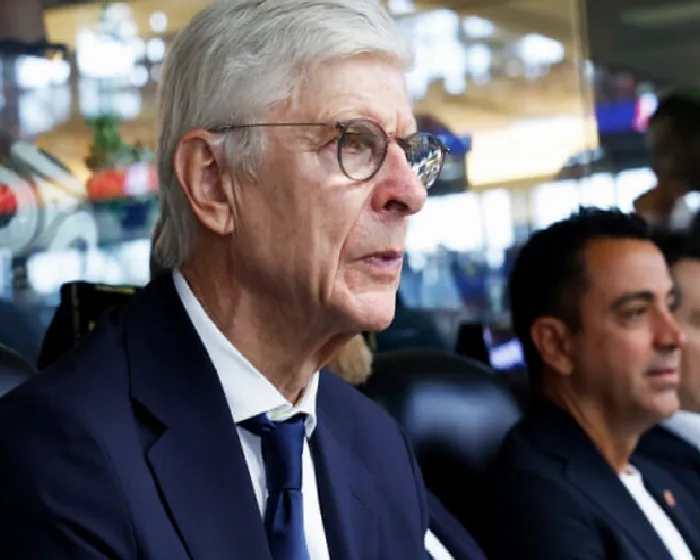
Arsène Wenger, Fifa’s head of global football development, has said that while the US faced numerous structural obstacles to becoming a real soccer power, many of those obstacles are being addressed by leadership at the US Soccer Federation and Major League Soccer.
- Pay-to-play excludes low-income players; expand access so top talent from poor backgrounds can develop.
- Talent identification needs an eye, education, and long-term consistency; evaluate players over years, not instant results.
- Decisions should be led by the national federation, not Fifa, given the United States vast geography and disparate soccer ecosystem.
- Long-term commitment and adequate resources are essential; best-resourced federations ensure access, coaching, government, community, and club support.
- Create a new, highly affordable youth system and pathway instead of merely lowering costs within the current pay-to-play model.
Speaking Thursday in a roundtable with US Soccer chief executive JT Batson and chief operating officer Dan Helfrich, Wenger heaped praise on the federation for its new $250m headquarters in Fayetteville, Georgia, saying “I feel it’s important for every footballer, somewhere, to feel you’re at home.”
“We push, with the support of our president [Gianni Infantino], a lot to develop football in the States,” Wenger said, “because [of] diversity, what football likes and what makes football strong, because [there’s] a quantity, 350 million people, and I’m sure there is talent. We [at Fifa] are working together to give a chance to everybody to develop the game and to love the game.”
However, Wenger cautioned, there is plenty of work to be done on the pitches that surround the complex. The former Arsenal boss said that there was “no alignment on the global policy of technical development” in the United States until very recently, but stressed that, considering the context of this country’s sprawling geography and disparate soccer ecosystem, decisions on how to move forward should be made by the federation, not Fifa.
That said, Wenger had some notable criticisms of the US soccer development system – namely the pay-to-play model that can see fees for youth soccer participation rise into the tens of thousands per year for families.
“From outside, I felt that people from a poor background had no real access to the game,” Wenger observed, “and that is quite a big part of a population. Usually, the best football players come from poor backgrounds, and so maybe there’s a job to do there as well to make it possible and available for everybody and, after, to be consistent because it’s not a short-term fix.”
Wenger compared the current effort, which has seen teams in MLS, the United Soccer League (USL) and other leagues begin free-to-play academy setups for a region’s elite players, to one undertaken by his home country decades ago.
“I was part of the opening of the first academies in France and it took 10 years. 1973, the first academy opened in France. 1984, France won the European Championship. You have to be consistent, and one of the things that is the most neglected is an identification of talent. It demands an eye. It demands an education. It demands consistency, to always give a chance to young players, to identify who has talent in five years – not now – and that is not easy to develop in every country.”
Before the topic shifted, Batson stressed that it isn’t a thrifty undertaking.
“This will take time and it will be hard and you have to commit and really stick to it,” Batson said. “And I think that is our commitment, to do that. But I think ultimately, this does take resources.”
“It’s not a coincidence that the teams that have gone the furthest in this tournament are some of the best-resourced federations in the world. They are able to ensure that there’s access. They’re able to ensure there’s great opportunity. They’re able to ensure there’s great coaching. And they have great government support. They have great community support. They have great professional club support. And so everyone’s working together with a shared mission to bring this to life. And I think that’s the opportunity we have coming out of the summer.”
Helfrich said that the efforts to make youth programs more accessible will require opening a new “system” rather than making the current operation more affordable.
“We are not seeking to make the current system more affordable; we’re trying to create a new system that then we make highly affordable,” Helfrich said. “It’s a really important distinction … We need a different system. We need a system that has the pathway open to more players.”