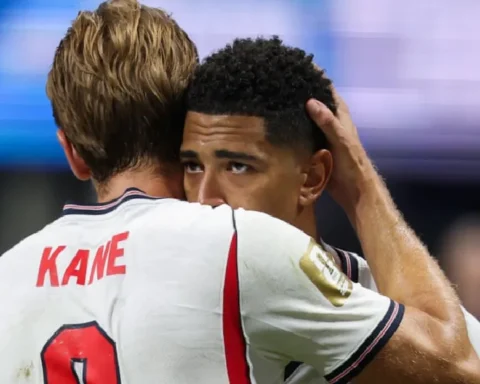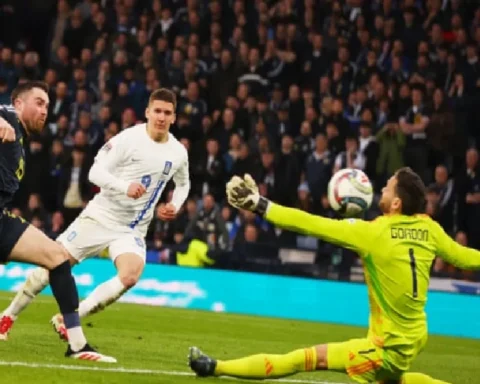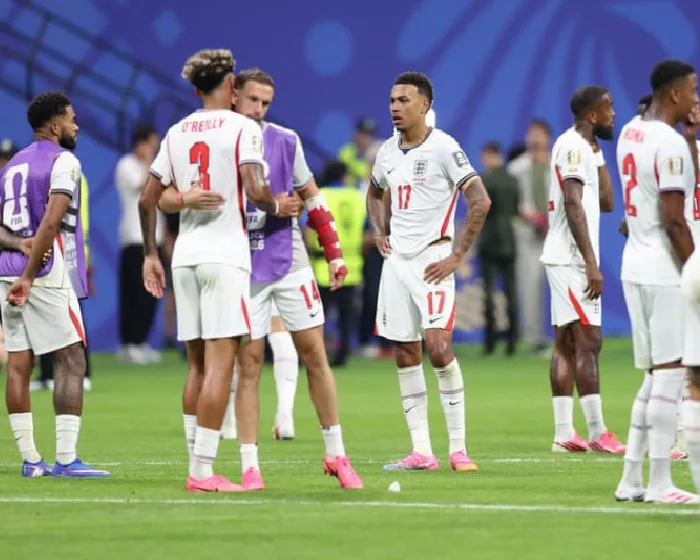
Many ugly statistics emerged once the postmortem began. The most damning came from OptaJoe, who noted England had 12% possession in the 30 minutes between Anthony Gordon’s goal and Argentina’s equaliser. “That is the lowest by a team to be winning for at least 10 minutes in a World Cup match in the last 60 years,” they added.
- Substitute Ezri Konsa for Anthony Gordon switched England to a 5-4-1, removing pace and counterattacking outlet.
- In the 19 minutes after Ezri Konsa's introduction England attempted 11 passes and completed only four, exemplifying a stifled attack.
- Goalkeeper Jordan Pickford made five of seven unsuccessful passes; three went out of play, fuelling England's loss of control.
- England showed poor game management: one free-kick conceded between goals and their final successful tackle came in the 63rd minute.
- Defensive substitution backfired: 201cm Dan Burn could not prevent a header from 174cm Lautaro Martínez.
It gets worse if we break this period down. Compared with what was to come, Thomas Tuchel’s side did relatively well before the hydration break. A fine Harry Kane pass helped set up a shot in the 66th minute, before the captain immediately had an effort when England regained possession in the final third. Although Emiliano Martínez’s goal was not seriously threatened, the sequence suggested Argentina could be occupied in their own half.
That threat disappeared once Ezri Konsa replaced Gordon as England adopted a 5-4-1 formation. The change left them with no real pace on the break. As huge a call as it would have been to substitute Kane, he provided little benefit once the team tried to see out the match with a low block.
Here’s something for Tuchel to consider as he awaits the third-place playoff rather than the final this weekend. England’s goal difference across the tournament was +6 from 6.3 matches, or +0.82 per 90 minutes played. It’s interesting how it fluctuated with different players on the pitch, as wary as we must be of reading too much into small samples for individuals in team sports. The goal difference was +2.01 per 90 when Bukayo Saka was playing, +1.16 for Reece James and +1.14 for Gordon.
Pace has helped them and it might have here, yet the Arsenal winger remained on the bench. Having a fast player to target up front would have offered an escape route from pressure.
About 19 minutes separated Konsa coming on and the winning goal. England attempted 11 passes in that period.
Eleven. This isn’t Spinal Tap, it’s a World Cup semi-final. Only four of their passes in this spell were completed: two from the post-hydration break restart as Jordan Pickford gave the ball to John Stones before immediately receiving it back, then another in stoppage time when Kane found Jude Bellingham only for him to surrender possession. The other successful pass? Bellingham’s kick-off after Enzo Fernández’s equaliser.
That sequence summed up how England’s hopes dissolved. Bellingham passed back to Pickford, who sent the ball long towards Kane to no avail. The goalkeeper was responsible for five of England’s seven unsuccessful passes between Konsa’s introduction and them going 2-1 down, with three of his efforts going out of play.
A lack of game management was another problem. Argentina frequently broke up play through fouls (not all of which were awarded) until they went behind. England conceded one free-kick between Gordon’s goal and the 97th minute and made their final successful tackle of the contest in the 63rd.
To cap it all, England conceded the winner to a header from 174cm tall Lautaro Martínez after bringing on 201cm Dan Burn to combat Argentina’s aerial threat. Burn’s only touches occurred in the final third after England went behind. In their own penalty area he was no use, more an incredibly large ornament.
No matter which numbers you use to analyse the period after England went ahead, the sums don’t add up.