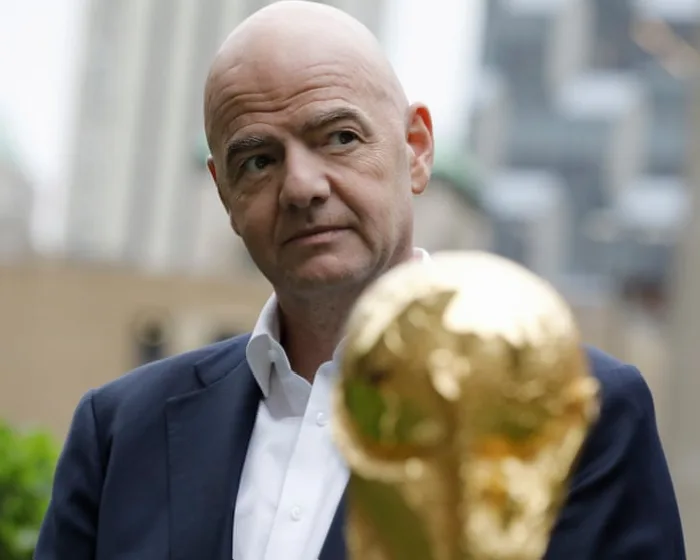
In hindsight, it was all in the open from the very off. When Gianni Infantino was first elected as president of Fifa in 2016 it was something of a shock victory and prompted hope for progress after the dark days of Sepp Blatter. Infantino had promised to restore “the image of Fifa”, but also anticipated that “everyone in the world will applaud us”. He promised accountability and transparency, but the core message to his electorate was to expect a “very significant increase” in funding. Just as a side note, there were also mutterings about him spending too much time on private jets.
- Gianni Infantino and Fifa pursue aggressive expansion, selling World Cup commercial rights and launching new revenue-generating tournaments.
- Expansion serves patronage, redistributed income secures member support, and changed rules entrenched Gianni Infantino.
- Personal ambition and alliances with leaders like Trump and Gulf states risk conflicts, sinecure prospects, and diluted accountability.
Back then, Infantino was described as being a typical Swiss bureaucrat, but no one would make that comparison now. Leaders within football instead prefer comments such as “he thinks he’s running a nation state”. This description feels particularly pertinent in the week Fifa announced without consultation plans to sell a share of the World Cup’s commercial rights to outside investors. But Infantino’s desire to grow both professional football and the revenues it creates has always been central to his pitch. The longer his time as president has gone on, the more wedded to this vision he has been.
Infantino first proposed expanding the size of the World Cup for the first time in 2016 and also raised the possibility of an enhanced version of the Club World Cup. In 2018, he added the idea of a global Nations League and looked to create a new corporate vehicle to deliver it, funded by outside investment, but the plan was ultimately abandoned under pressure. It was also confirmed in 2017 that the World Cup would expand to 48 teams for the 2026 tournament. In 2021 it was reported that the 12 Super League clubs had expected Fifa to endorse them in their breakaway, before it was ultimately abandoned under pressure. At the end of that year, Infantino announced plans to make the World Cup biennial.
It goes on from there, with an even faster pace of activity and proposed innovation detectable after football emerged from the Covid-19 pandemic with substantial financial losses (which Fifa sought to plug in part with funds from its Forward Programme). There was the launch of the 32-team Club World Cup and immediate discussion of its expansion, the sudden and uncontested awarding of the 2034 World Cup to Saudi Arabia, the spread of the 2030 World Cup to take place in three continents and six host countries, and the possibility that tournament could again be expanded, to take in 64 national teams. Mandatory hydration breaks were an idea taken up at the end of last year.
A question regularly asked by football’s decision makers is: what is eating Infantino? What is it that drives his constant appetite for expansion? The most commonly made argument is patronage; that the money raised from expanded competition – and redistributed to member associations – ensures a supportive electorate when it comes time to renew your mandate (Infantino has, of course, changed the rules on how long a Fifa president can serve since coming to power). But Infantino has already in effect trebled Fifa’s revenues since becoming president – is that not enough to earn support? And even with a new rulebook, Infantino’s all-but confirmed third full term will be his last.
The specific nature of his latest plan has generated another possible explanation: that Infantino is expanding Fifa’s reach in order to create a sinecure on his departure. Reports in the Times suggested that Infantino could become CEO of the new venture once he leaves the presidency, and would receive remuneration more befitting of a corporate leader than the boss of an NGO. Fifa has denied that any such discussions have taken place but, even if a new lucrative role does come to pass, again it doesn’t seem quite enough to explain all the shenanigans that have gone before.
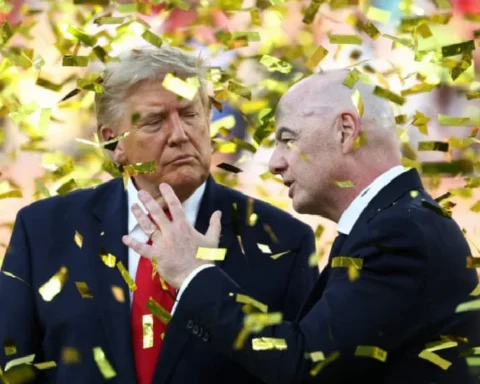
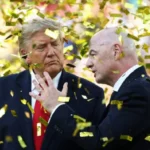
A third, more prosaic argument, but one increasingly hard to dismiss, is that Infantino is simply in thrall to status and power. The Italian kid growing up working class in rich Switzerland, being bullied for his ginger hair, is now at the top table. As an adult he has consistently shown an appetite for the high life and for associating with celebrity (alongside the private jets, he drafted in a dozen former professionals, nowadays known as Fifa Legends, to endorse his 2016 candidacy). Since becoming Fifa president his focus has shifted to consorting with world leaders, while also mimicking their behaviours. His relations with Vladimir Putin, the emir of Qatar, the crown prince of Saudi Arabia and, ultimately, the US president, Donald Trump, have shown Infantino in a new context, a far grander one.
His new status has given Infantino more power, or at least the perception of it, and he has been able to force through any number of changes without effective pushback from inside Fifa or the game more broadly. But political alliances are often unstable and commonly transactional. The risk is that they can extract a heavy price and one senior football figure described the new commercial plan as being not Infantino’s ambition at all. “Gianni has got in way over his head with Trump,” they said. “He [Trump] is now extracting his share of the World Cup rewards.”