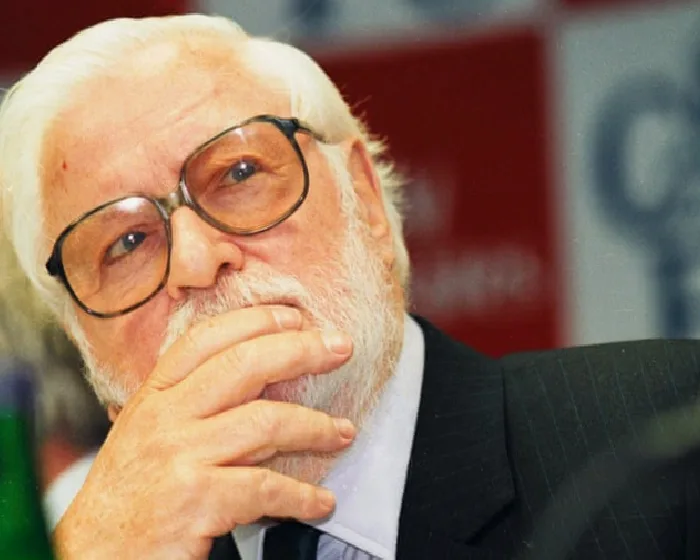
Ken Bates, one of the most colourful and controversial figures in the history of English football, has died aged 94, Chelsea have announced.
- Bought Chelsea for £1 in 1982 and funded a rebuild, securing promotion to the First Division in 1984.
- Sold Chelsea to Roman Abramovich for £140m in 2003, triggering a transformative spending spree that changed the game.
- Won a legal battle with Marler Estates, securing the Stamford Bridge freehold for supporters via Chelsea Pitch Owners.
- Repeated controversies: proposed a 12ft electric perimeter fence, feuds with supporters and Matthew Harding, and criticised youth-team abuse allegations in 2018.
- Owned Oldham and Wigan, bought 50% of Leeds; Leeds entered administration in 2007 with heavy point deductions and relegation.
The club reported on Saturday afternoon that Bates had died peacefully in Monaco surrounded by his wife and family. “It is with great sadness that we share the news of the loss of Ken Bates, former owner and chairman of Chelsea Football Club.
“The club sends our heartfelt condolences to Ken’s wife, Suzannah, the rest of his family and his friends. Ken’s determination to fight for Chelsea when times were tough and drive the team on to winning trophies will never be forgotten.”
A businessman who was involved in football ownership and administration for the best part of five decades, Bates is best known for his time at Chelsea, buying the club in the early 1980s before reviving it and selling to Roman Abramovich in 2003, a decision that had a significant, lasting effect on the sport. In between, as well as beforehand and afterwards, Bates fell out with a number of people, often unapologetically so.
Born in December 1931, Bates endured a difficult childhood. His mother died soon after he was born while his father absconded, leading to him being raised by his grandparents in a council flat in Ealing, west London. He supported nearby Queens Park Rangers and dreamed of playing for the club, but was not good enough, in part due to a club foot that required multiple operations.
Bates went into business for himself and it proved a successful step as he made a personal fortune in haulage, quarrying, ready-mix concrete and dairy farming.
Bates also involved himself in enterprises on the British Virgin Islands and in Rhodesia before deciding to focus his attentions on his first love – football. He bought Oldham in 1965, becoming the chair of the Third Division club, before moving on to Fourth Division Wigan in 1980, where he was vice-president, having bought the club with his longtime business partner, Freddie Pye. Both spells were largely successful, fuelling Bates’s desire to move on to another club, which he did in 1982, buying Chelsea for £1.
The knockdown price was due to Chelsea being in serious financial trouble, as well as a struggling Second Division side. But Bates sensed an opportunity so made the trip back to London and went about reviving a famous name of the 1960s and early 1970s. Money was made available to the manager, John Neal, which in turn led to players such as Kerry Dixon, Pat Nevin, Mickey Thomas, Nigel Spackman and David Speedie arriving at the club and inspiriing a return to the First Division in 1984.
That was the start of an eventful time in Chelsea’s history, with most of that down to the influence of Bates. He fought a successful legal battle with the property developers Marler Estates, which led to the freehold of Stamford Bridge moving into the hands of a supporters-led organisation, Chelsea Pitch Owners. He got into a dispute with supporters when, in 1985, he installed a 12ft-high, 12-volt electric perimeter fence at the stadium in order to deal with pitch invaders. Only the intervention of the Greater London council on safety grounds stopped the fence from being activated.
In the 1990s, Bates was in a bitter dispute with the benefactor and vice-chair Matthew Harding, who died in a helicopter crash in October 1996. But this was also a time when Bates, with the significant help of Harding’s money, oversaw a hugely exciting and successful period in Chelsea’s history. Stamford Bridge was impressively renovated and a team led first by Glenn Hoddle and subsequently by Ruud Gullit and Gianluca Vialli, and at different stages contained all three alongside players such as Marcel Desailly, Roberto Di Matteo and Gianfranco Zola, won multiple honours, including the FA Cup, League Cup and the Cup Winners’ Cup.
Chelsea were on the rise, but it came at a cost, namely £80m in debt, which by the summer of 2003 Bates was struggling to finance. He accepted an offer of £140m for the club from Abramovich, then a largely unknown Russian billionaire. The takeover signalled a spending spree that would lead to Chelsea becoming one of the biggest forces in English and European football and transfer fees rising everywhere. Quite simply, Abramovich changed the game.
Bates remained Chelsea chair until March 2004. Less than a year later, he bought a 50% stake in Leeds. The ambition was to repeat what he had done at Chelsea by overseeing the rebirth of a fallen giant of English football, but while his time there was as eventful it was nowhere near as successful. With Bates as chair, Leeds fell into administration in 2007 with a debt of £30m, including about £7m owed to HM Revenue and Customs, leading to a 10-point deduction and relegation to League One, when they were hit with a subsequent 15-point deduction.
Leeds found their way back to the Championship in 2010, but never succeeded in taking the next step of reaching the Premier League under Bates’s watch. There were constant supporter protests against him and he sold the club to the Middle East-based private equity group GFH Capital in November 2012 and left Elland Road entirely in July 2013, retiring to Monaco.
In 2018, Bates’s comments over a scandal at Chelsea were labelled “truly shameful” after a number of youth-team players claimed they were racially abused by their own coaches during his tenure. Bates was critical of the victims for wanting to keep their identities secret and questioning why they did not report it when they were children. “The sniff of money is in the air,” he said, “and I think in view of all the terrible miscarriages of justice over allegations of varied abuse – sexual, racial, etc – it’s time people should take a tough line.
“OK, name the people. Name the times. What was actually said? What was your response? This is trial by smear and it’s not good enough.”
In 2022, Chelsea agreed to pay damages in an out-of-court settlement to eight former youth team players who made the allegations and were taking their case to the high court in London.
Bates also had a three-year spell as owner of Partick in the mid-1980s, as well as an executive role at the Football Association until 2001. For all his faults there can be little doubt he lived a notable life. As he put it in an 2024 interview: “I’ve made many enemies, but I’ve made a lot of my friends laugh: that’ll be my epitaph.”