A cricket scorecard is pretty straightforward.
- Subtle racism made me feel like an outsider; being one of few who are Muslim or pray heightened that sense of difference.
- Christchurch mosque shootings showed hatred starts with words; I supported Reporting Islamophobia led by Aftab Malik to encourage reporting.
- I yearn for Australia where only performance matters; I hope young Muslim kids simply pick up a bat and feel they belong.
It shows you how many runs you scored, how long you played and whether your team won or lost. Cricket has always been appealing to me because of that honesty. The numbers don’t care about your appearance, where you were born or what you believe.
Life, unfortunately, isn’t as simple.
I grew up in western Sydney, where diversity wasn’t something governments talked about – it was simply life. My mates came from all over the world. Different cultures, different languages, different faiths. We were all just kids who loved sport.
If I experienced prejudice growing up, it wasn’t because I was Muslim. Most people didn’t know much about Islam back then.
It was because I was the brown kid.
Sometimes it was a joke. Sometimes an assumption. Sometimes it was just that quiet feeling of being reminded you were different. Racism rarely shouts. More often, it whispers that perhaps you don’t quite belong.
Cricket became the place where none of that was supposed to matter. If you scored runs, you earned your place.
Or at least I wanted to believe that.
As I progressed through representative cricket and into the Australian team, there were times I still felt like an outsider. Not because people necessarily intended it, but because when you’re one of very few people who look like you, pray like you or share your background, you become constantly aware of your difference.
Sport loves to celebrate diversity. We proudly feature it in campaigns and photographs. But inclusion is something deeper. It’s creating an environment where nobody has to wonder whether they truly belong.
The Christchurch mosque shootings changed that conversation for ever.
Watching innocent people murdered while praying was a reminder that hatred doesn’t begin with violence. It begins with words and stereotypes. It’s the slow process of dehumanising people until the unthinkable becomes possible.
That’s why I accepted an invitation to speak at the Reporting Islamophobia campaign, which is a pretty good initiative by the office of the special envoy to combat Islamophobia, led by Aftab Malik.
I’m all for this campaign because reporting is pretty important. Too often, anti-Muslim abuse is brushed off as just “online” or “someone’s opinion”. But hate can build up. Every insult, threat and abusive message chips away at someone’s sense of belonging. Reporting this helps show how big the problem is and gives governments, institutions and digital platforms the evidence they need to take action.
Most importantly, it lets victims know they’re not alone.
I’ve noticed something change over time. People started focusing more on my faith than my cricket.
For years, Australians were debating my batting technique, whether I should open or bat at number three. That’s cricket, and I’m happy for people to disagree.
What surprised me was when some people stopped talking about my batting altogether.
The cricketer disappeared behind the Muslim.
My wife, who’s an Australian who embraced Islam, has often received even more abuse than I have. Watching someone you love become a target because of the faith she chose reminds you that prejudice never just affects one person. It reaches families, children and whole communities.
Like every community, Muslims are diverse. But the majority of us just want what every Australian wants: to build a good life, raise our families, contribute to our communities and practise our faith in peace.
For many of us, that means we don’t drink alcohol, we dress modestly and we try to live with kindness, humility and respect. These aren’t values that are outside Australian society. They’re values that strengthen it.
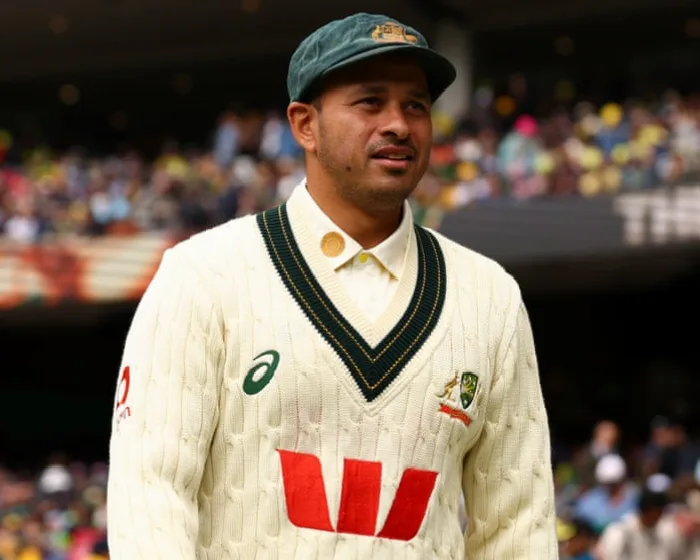
Australia has given me opportunities my parents could hardly have imagined. Every time I pull on the baggy green, I do so with huge pride. This is my home. I wouldn’t choose to live anywhere else.
Even though there are challenges, the Australia I cherish isn’t about prejudice. It’s about teammates who become lifelong mates, neighbours who look after each other and complete strangers who simply wish me well before the next Test.
Those Australians far outnumber the angry voices online. The loudest voices aren’t always the biggest.
Every time I wore Australian colours, I was reminded of what that cap represented: a team made stronger because every player brought something different.
I hope the next young Muslim kid growing up in western Sydney won’t spend time wondering whether they belong.
They will simply pick up a bat, walk to the crease and know that the only thing anyone cares about is how they play.
That’s an Australia worth batting for.