It’s about the ball, right up until the moment it isn’t. On Sunday afternoon Godoy Cruz played Defensores de Belgrano in Nacional B, the second division of Argentinian football, and among the sea of blue home banners were two crosses of St George, apparently expropriated from England fans at the 2014 World Cup. One reads: “Boys & Girls From Oakwell Barnsley.” The other: “Big Al – Y-Bird – South Croydon – CPFC.”
- Not a simple grudge: England v Argentina is a dialogic relationship of rivalry, kinship, and long-repressed mutual fascination.
- England's influence pervades Argentina: place names, clubs like River Plate and Arsenal, language, institutions such as Harrods branch.
- Both football cultures share neighborhood clubs, singing, mass travel rituals, military tropes, and shared terms such as crack and orsai.
- The Falklands/Malvinas war remains a powerful cultural touchstone, visible in banners, tattoos, player actions, and dressing-room tributes.
- Sparse competitive fixtures preserved its purity; limited player exchange and mythical figures like Messi and Maradona remain remote, enhancing romance.
Now I want you to reflect on the levels of pure and gorgeous malevolence – pettiness doesn’t quite cover it, nor does spite – required to travel to Brazil, obtain an English flag, fold it away, bring it home in your luggage, keep it in pristine condition for 12 years, only to unveil it in your second-tier football stadium in the week Argentina play England in a World Cup semi-final. The restraint and optimism required to allow your minor act of territorial banter to fester and mature for over a decade. That, ladies and gentlemen, is a footballing rivalry.
And of course it is a rivalry that strikes so many other notes: war, culture, empire, nationalism, collective memory, the role of rules and law in constructing a society, and above all a mutual fascination that time seems to have deepened rather than dissolved. Often you will see Argentina v England described as a “grudge match”, but really this is a feeling so much more complex than hatred, so much more nuanced than tribal revulsion: a dialogic relationship defined not only by distance and difference, but by a weird and long-repressed kinship. No, we do not have more in common than what divides us. But the first does help to explain the second.
For one thing, it’s often overlooked just how much of an influence this country has had on Argentinian culture. Unlike Brazil, which in the British imagination existed as an exotic, sensory jungle paradise, Argentina was raised as a kind of faithful son, the “sixth dominion” of the empire. From place names to street names, from the rugby and polo clubs established by the colonial elite to the culture of “merienda” derived from English afternoon tea. The only ever overseas branch of Harrods was in Buenos Aires from 1912 until 1998. English rock bands such as the Smiths and the Cure are wildly more popular in Argentina than in other similar-sized countries.
In football this is evident in club names such as Newell’s Old Boys, River Plate, Arsenal, as well as more informal terms such as “crack” (a star player) or “orsai” (offside). For many years amateur matches would begin with a cry of “aurieli” (are you ready?) from one captain to the other. Look hard enough and you can spot so many similarities between their footballing cultures: the depth of the pyramid, the neighbourhood club as an expression of local tradition, the role of song and mass overseas travel as bonding rituals, the preponderance of war and military tropes. For many Argentinian fans the Falklands war seems to occupy the same spiritual space that the second world war does in England, visible to this day not only on banners and murals but even tattoos, referenced not only on the terraces but even by the players themselves.
“For the Malvinas, for Diego, for Leo’s last one,” the Argentina squad belted out in the dressing room after their quarter-final win over Switzerland. Rodrigo De Paul sent his framed shirt from the 2022 World Cup to the Malvinas veterans centre in Lomas de Zamora. And in fairness this is a process that was in train long before 1982, a postcolonial insurgence that arguably began in the 1940s and 1950s under Juan Perón, a gradual and deliberate refusal of English influence, through which football acted as a kind of rhetorical conduit.
“Very early, an Argentinian way of playing football was born that clearly distanced itself from the English influence,” said Jorge Valdano, a veteran of the famous 1986 World Cup quarter-final against England. “We tried to be antagonistic to the English. If they liked long passes, we favoured shorter ones. If the English favoured passing, we’d focus on dribbling. Against England, there was something else at stake, and at the time it was worth more than the championship.”
Over time the feeling became mutual, if not quite equal. If Argentina was once a favoured son, then perhaps the vitriolic reaction to its subsequent turn lay in a kind of guttural, butthurt disappointment. An ill-tempered friendly at Wembley in 1974 was marked by chants of “animals” every time Argentina touched the ball, echoing the accusation of Alf Ramsey eight years earlier. By 1986 Jimmy Greaves was cracking Falklands jokes on ITV’s World Cup coverage and proudly waving a German flag before the final against West Germany. “Just no class at all,” Sol Campbell said of the 1998 team who knocked them out in Saint-Étienne. “Whirling their shirts around, banging on the window. Just a bunch of idiots.”
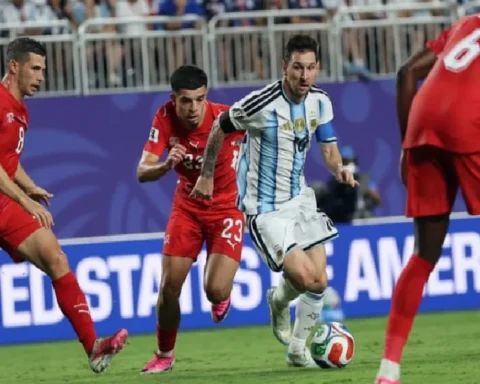
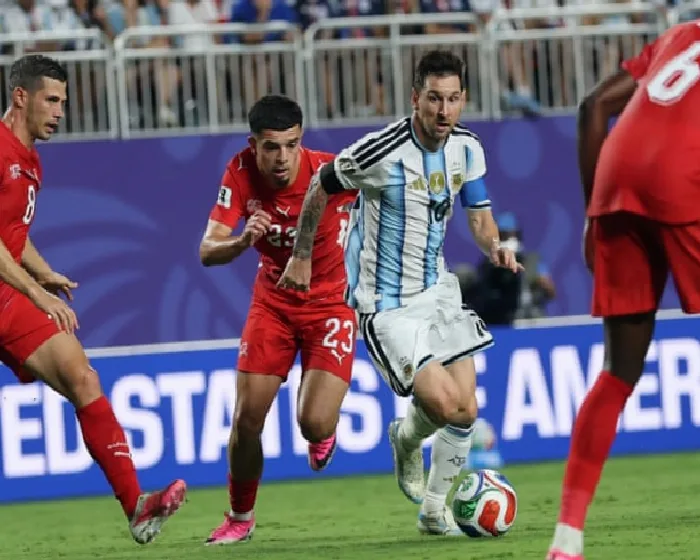
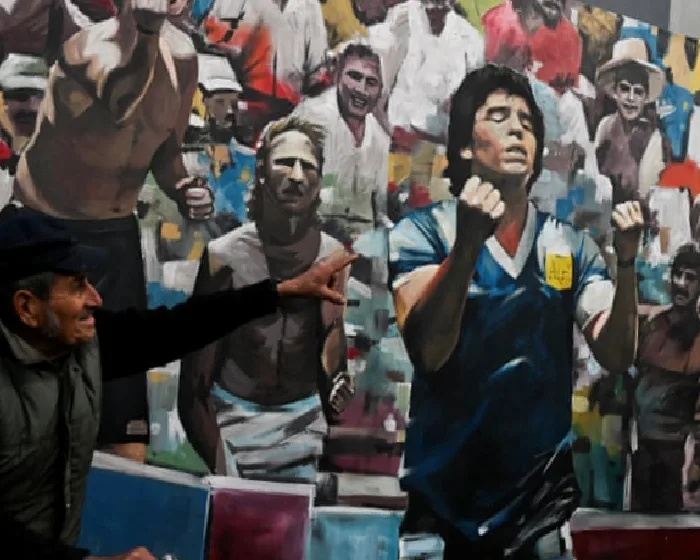
Yet whereas most sporting rivalries eventually become commodified and crushed by the capitalist machinery of Big Sport, somehow this one has remained pure through scarcity. The two countries have not played competitively since 2002, and for such a consequential footballing culture, Argentinian influence on English football remains modest. We got Ossie Ardiles and Sergio Agüero but never Gabriel Batistuta or Juan Román Riquelme, Mauricio Pochettino but never Diego Simeone, and of course never the two greatest of all, Lionel Messi and Diego Maradona, who even in the age of saturation still feel somehow remote and mysterious to us, a secret on which we were never quite let in.
Too different and distant to be friends; too entwined and alike to be purely enemies; neither a clash of pure equals nor a simple parable of coloniser versus colonised. Perhaps this is why Argentina v England has a fair claim to be the greatest and most romantic of the footballing rivalries, less a blood feud and more a messy, century-long break-up.
Look beyond the flashpoints and flare-ups and there is something more profound at work here. The teeth-baring may as well be a mark of respect: a shared and illicit admiration, perhaps even a love that dare not speak its name.